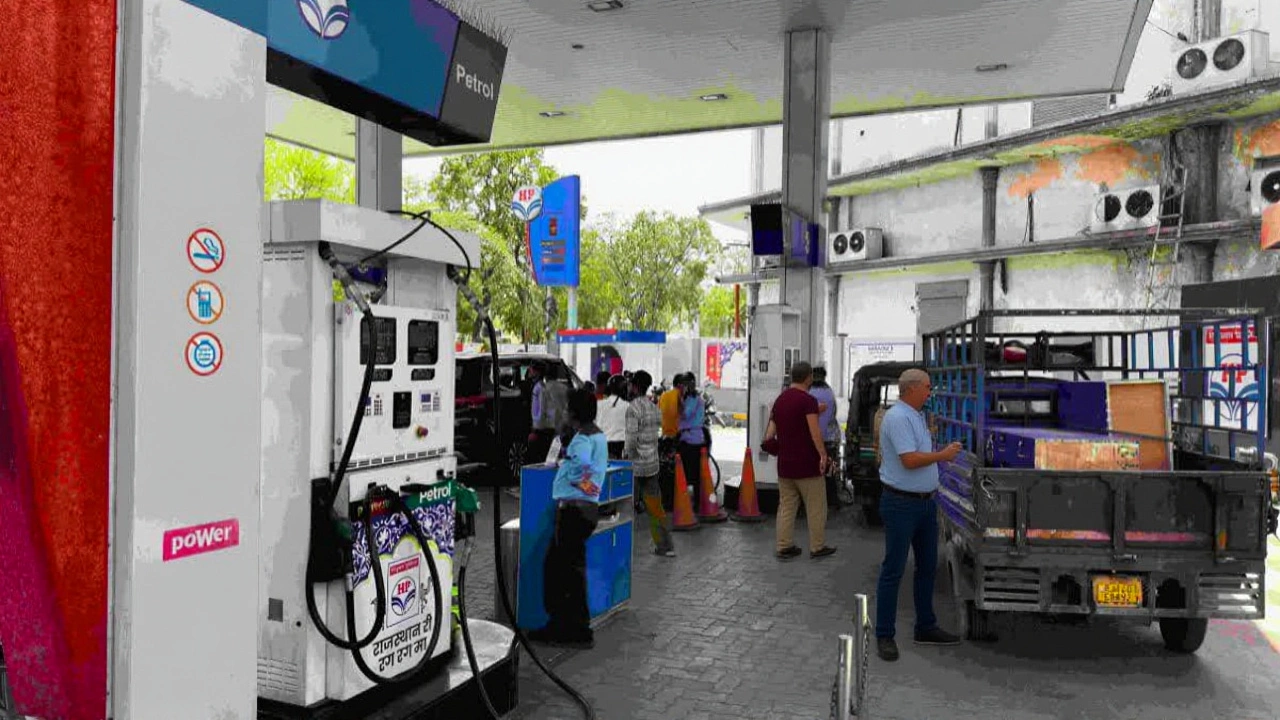
When Amit Sharma, a daily commuter in New Delhi, filled his tank on May 25, 2026, he noticed something unsettling. The pump display didn't just show a small tick-up; it reflected a significant jump that has become the new normal across the country. Petrol and diesel prices in India have surged in multiple stages over the past two weeks, breaking a four-year period of relative stability.
The latest data reveals a stark reality for consumers. In Rajasthan, petrol now costs ₹112.66 per liter, marking a recent increase of ₹2.82. But this isn't an isolated incident. From Mumbai to Kolkata, fuel costs are climbing, driven by global geopolitical tensions and shifting crude oil markets.
A Four-Year Stability Shatters
Here's the thing: for nearly four years, Indian consumers had grown accustomed to stable fuel prices. That era ended abruptly. According to reports from ABP Live, the first major shock came when petrol prices jumped by ₹3.14 per liter and diesel by ₹3.11. This wasn't a minor adjustment; it was the first significant correction after a long plateau.
In New Delhi, the capital city, the ripple effect was immediate. Petrol, which previously stood at ₹94.77 per liter, shot up to ₹97.77. Diesel followed suit, rising from ₹87.67 to ₹90.67 per liter. For millions of commuters, this single change meant higher monthly expenses before they could even adjust their budgets.
But wait—the story doesn't end there. Just days later, another hike hit. On a Tuesday in late May, public sector oil companies announced further increases. Moneycontrol reported that petrol in Delhi rose by another ₹0.87, reaching ₹98.64 per liter. Diesel saw a smaller but still painful bump of ₹0.91. These consecutive hikes within a short window have left economists scratching their heads and wallets feeling lighter.
Geopolitics Meets Your Gas Tank
Why is this happening now? The twist is international. News videos circulating on YouTube explicitly link these domestic price surges to the ongoing conflict involving Iran. As tensions escalate between Iran and the United States, global crude oil futures become volatile. India, being one of the world's largest importers of crude oil, feels every tremor in the global market.
Interestingly, despite the geopolitical chaos, domestic crude oil futures on the Multi Commodity Exchange (MCX) showed a dip of ₹344 at one point. Yet, retail prices continued to climb. This disconnect often confuses consumers. The reason? Oil marketing companies factor in anticipated future costs, currency fluctuations, and inventory adjustments, not just the current day's spot price.
Within just 10 days, fuel prices were hiked for the fourth time. A video report noted a specific instance where petrol increased by ₹2.61 and diesel by ₹2.71 per liter. This frequency of adjustment—once rare—is becoming the new rhythm of the Indian energy market.

Regional Variations: Who Pays More?
The impact isn't uniform across the country. State taxes play a massive role in final pump prices. Let's look at the numbers as of May 25, 2026, based on data from Hindi financial portal Hindi Goodreturns.
- Andhra Pradesh: Petrol hits ₹117.88/liter (highest among major states), with a recent hike of ₹2.86.
- Kerala: At ₹115.49/liter, it remains one of the costliest places to refuel.
- Bihar: Petrol stands at ₹113.35/liter, reflecting high state excise duties.
- New Delhi: While lower than southern states, it sits at ₹102.12/liter, having risen by ₹2.61 recently.
- Goa: One of the more affordable spots, with petrol at ₹104.19/liter, though still up by ₹2.06.
The average petrol price across India hovers around ₹103.44 per liter. However, this average masks the severe disparities between states. A driver traveling from Goa to Andhra Pradesh pays nearly ₹13 more per liter—a difference that adds up quickly for logistics companies and truck owners.
The Broader Economic Impact
This isn't just about filling your car. When fuel gets expensive, everything else does too. Transport costs rise, leading to higher prices for vegetables, fruits, and manufactured goods. Inflationary pressure builds, forcing the Reserve Bank of India to keep interest rates steady or potentially higher.
Experts warn that if the Iran situation escalates further, we could see another round of hikes. "The correlation between Middle East tensions and Indian pump prices is direct and immediate," notes an energy analyst. "Consumers need to brace for volatility."
For the common man, the message is clear: budget accordingly. The era of cheap fuel appears to be over, replaced by a period of uncertainty driven by global politics and local tax structures.
Frequently Asked Questions
Why are fuel prices increasing so frequently in India right now?
The frequent hikes are primarily driven by geopolitical tensions involving Iran and the US, which cause volatility in global crude oil prices. Additionally, Indian oil marketing companies adjust prices daily based on international exchange rates and inventory levels. The recent breaks in the four-year stability trend reflect these external pressures.
Which state has the highest petrol price in India as of May 2026?
As of May 25, 2026, Andhra Pradesh has one of the highest petrol prices at ₹117.88 per liter. Other expensive states include Kerala (₹115.49) and Bihar (₹113.35). These high prices are largely due to higher state VAT and excise duties imposed by local governments.
How much did petrol prices rise in New Delhi recently?
In New Delhi, petrol prices have seen multiple hikes. Initially, they rose by ₹3.14 per liter, moving from ₹94.77 to ₹97.77. Subsequently, another increase of ₹0.87 brought the price to ₹98.64. Recent data also shows a further adjustment, with the current rate listed at ₹102.12 per liter, reflecting a cumulative increase of over ₹7 in a short period.
Is there a connection between the Iran war and Indian fuel prices?
Yes, there is a direct link. India imports a significant portion of its crude oil from the Middle East. Conflicts involving Iran disrupt supply chains and create fear of shortages, driving up global crude prices. Since India's retail fuel prices are linked to international crude benchmarks, any spike in global costs is quickly passed on to consumers at the pump.
Will fuel prices drop soon?
It is difficult to predict with certainty. While crude futures on MCX showed some dips, retail prices remain sticky due to accumulated costs and currency factors. Unless there is a significant de-escalation in geopolitical tensions or a drop in global crude benchmarks below key thresholds, prices are likely to remain elevated or continue ticking upward in the short term.